
August Staff Recommendations
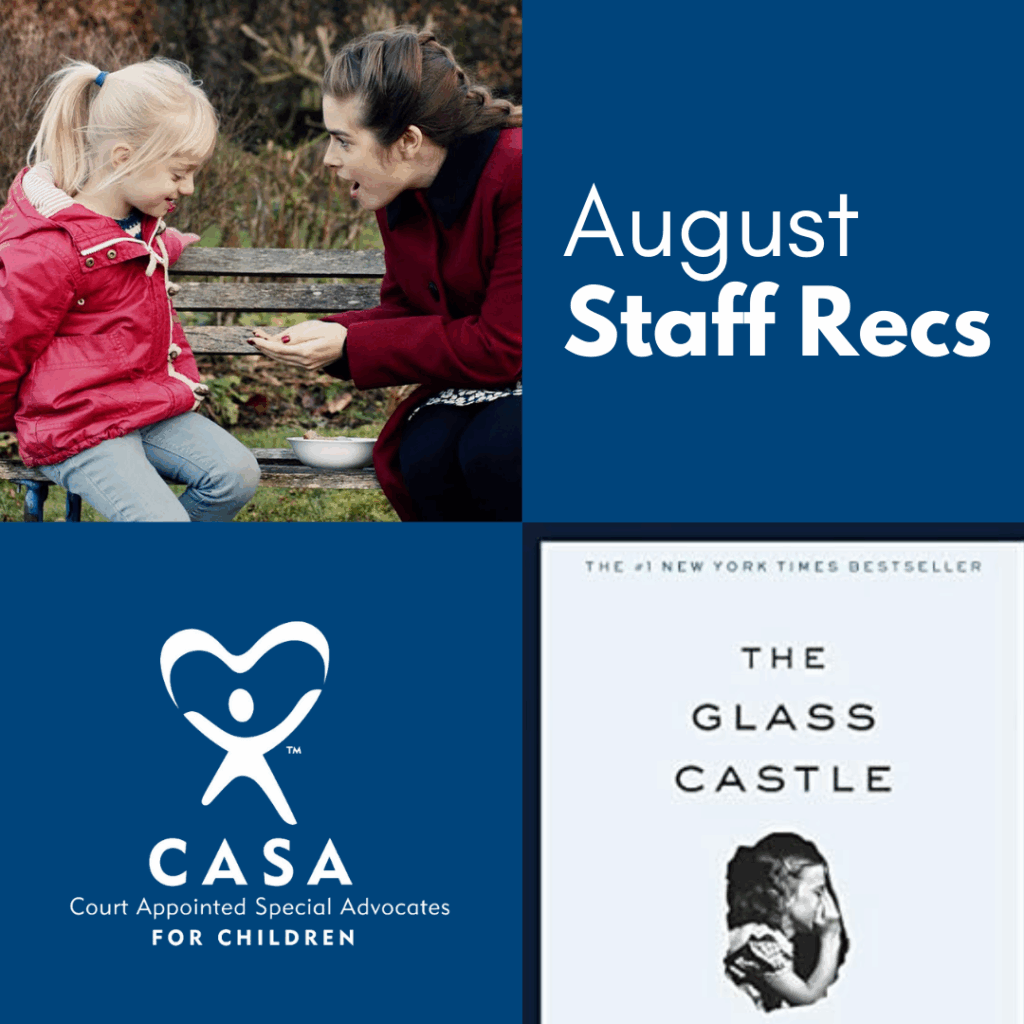
Staff Recommendation #1 The Glass Castle by Jeannette Walls
New York Times Bestseller Author Jeannette Walls recounts her traumatic childhood in her memoir The Glass Castle. Her father, a brilliant yet troubled man, became destructive when he drank. Her free-spirited mother resisted the responsibilities of raising a family. Together, they created a dysfunctional environment that forced Jeannette and her siblings to fend for themselves. The children relied on each other, overcoming trauma and hardship. Today, they lead successful lives in New York.
Kirsten shares, “The Glass Castle is a memoir about the author’s unconventional and often traumatic childhood marked by poverty, instability and resilience. Despite the challenging circumstances, the author and her siblings persevered, formed strong bonds and worked together one by one to break free and build their own successful lives in New York City. The Glass Castle covers a multitude of the child welfare concerns that encompass the work we do at CASA.”
Staff Recommendation #2 The Silent Child
The Silent Child is an inspiring short film that follows the story of Libby, a deaf four-year girl who lives in a world of silence until a social worker intervenes and teaches her the gift of communication. Newly empowered by her ability to communicate, Libby feels more connected to the world than ever before.
Amy shares, “This short film is set in Ireland (but really applies to the U.S.) and focuses on a educational and advocacy challenges that arise for deaf children. The short film does a fantastic job of showing the challenges with balancing family dynamics, the family’s expectations and desires, school settings, and the best interest of the child. In such a powerful way, it really shed light on how deaf children can easily be misunderstood or failed by those around them.”
Staff Recommendation #3 How To Know A Person by David Brooks
How to Know a Person: The Art of Seeing Others Deeply and Being Deeply Seen by David Brooks, teaches us how to truly connect with others on a deeper level through thorough communication, attentive listening, and being present in the moment.
Darcy shares, “This book reminds us that we are all humans, who want to be seen and heard. Brooks provides us with a manual on how we can better listen to, communicate with, and be present for others. Some people are natural listeners; others need to work on the skill. Either way, we are living in times when we are so busy yelling over each other that we aren’t actually hearing each other. This book offers us a path to hearing, and then LISTENING to what others are trying to tell us.”