
November Volunteer Spotlight: Rodney Page
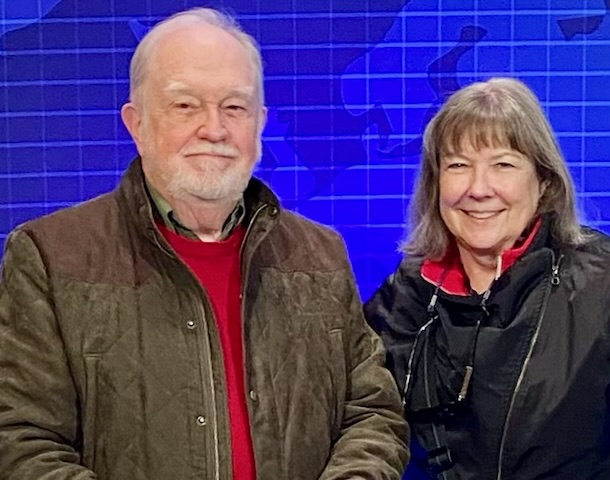
This November, we are proud to recognize a special volunteer whose background in law, passion for serving the underserved, and steady drive led him to advocate for Fairfax’s most vulnerable children. Meet Rodney Page–CASA volunteer of nearly five years, husband, grandfather, and lay leader! Since joining Fairfax CASA, Rodney has served three children across two cases, and has proven to be a steady, reliable, calm presence for not only the children to whom he is assigned, but also to the CASA program. Read more about this month’s volunteer spotlight down below.
His supervisor Keenan shares, “Rod is a dependable, steady, and sagacious volunteer who clearly has a passion for CASA work. His legal experience has allowed him to educate himself on the immigration system which has yielded benefits for the youth with whom he is working, who have both obtained their work permits. He understands what is important, and what is not, and has been able to direct his advocacy in directions that make a difference. Rod is very generous with his time – he’s worked two cases simultaneously, is one of our more frequent volunteers who attend unassigned cases, and has been fantastic and engaging when conveying his experience to prospective CASAs at our information sessions. Rod is an incredibly valuable asset to our organization and we are very lucky to have him with us!”
Are you from the area?
I’ve moved around to many different places, but officially moved to Virginia in 1971 and have lived here ever since. This was our top pick for retirement, and it has worked out very well for us.
What did you do prior to becoming a CASA?
After graduating from law school, I joined a law firm in Washington, D.C. I practiced law in downtown D.C. for 50 years. I was a litigator handling commercial and corporate work. And I also did trial and arbitration work, and spent several years managing two different law firms. In 2021, I retired and became a CASA.
When you’re not volunteering as a CASA, what can we find you doing?
There are three major activities that keep me busy:
One. Being a CASA volunteer.
Two. I’m very active in my church and hold a lay leadership position.
Three. Reluctantly, I became the president of a homeowners association about five years ago.
Outside of my responsibilities, my wife and I travel quite a bit. While I was practicing law, I spent about four years working in London. As a result, my wife and I developed an affinity for the British Isles. We’ve probably visited there more than anywhere else. We also travel to Europe often and visit family throughout the country.
What brought you to CASA?
I used to do pro bono work for the juvenile courts and immigration courts. I was exposed to the growing number of undocumented children in the system and provided pro bono assistance to children in those situations. When I retired, I knew this was an area I remained passionate about. CASA presented a unique opportunity for me to stay involved with both the juvenile court and undocumented children–but in a different capacity than before.
What has been your most memorable experience as a CASA?
In June, one of the young adults that I work with graduated from high school. At the ceremony, he received an award only given at graduation–considered the highest honor and based on a student’s character.
This young adult had no family and no true support system. He defied the odds and accomplished this major milestone. Part of his recognition was his role in helping bring about the reunification with his younger brother, from whom he had been separated. It was incredibly gratifying to witness this moment.
What is the best part of being a child advocate?
Being able to contribute something meaningful to the lives of the children that I work with makes this role worthwhile. The children have many needs, and as a CASA, my job is to observe and identify what those needs are. I’m grateful to be able to make a contribution–whether by befriending them or boosting their confidence.
What do you find the most challenging about your role as a CASA?
There’s a tendency many CASAs, including myself, experience: the feeling that you can take charge of a situation and fix it. But that isn’t our job. We aren’t there to replace a social worker, parent, or advisor–we are the advocates. Recognizing the limitations of the role can be a challenge at times.
On a related note, I believe covering an unassigned case can be beneficial for a CASA. I volunteer at least once a month to cover an unassigned hearing. The experience has given me a broader perspective on the situations involving a larger number of children. Each case is different and complex, but so helpful in understanding the child welfare system. You gain a deeper understanding of the importance of CASA and how the process works.
What advice would you give to someone considering becoming a CASA?
I’ve recommended it to many people. This can be a rewarding experience, but also challenging in the ways I’ve described. The most important thing is to understand who you are and what your role is in these children’s lives. A new CASA should be open-minded and prepared to be exposed to new things.
Thank you, Rodney, for making a difference where it matters most.
Register for an upcoming virtual information session, to learn how your time can change a child’s life.