
Volunteer Spotlight: Meet Nancy Dolliver
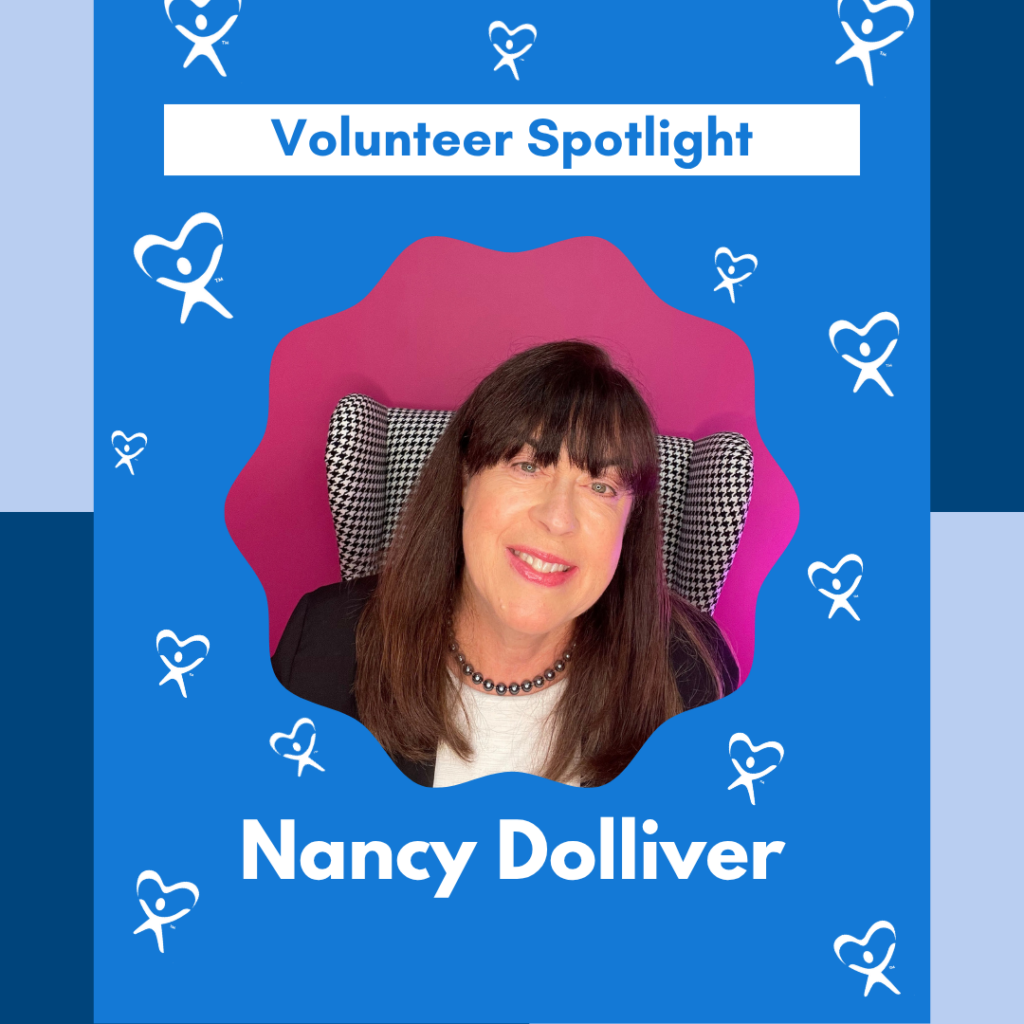
Helping families in crisis move forward is Fairfax CASA volunteer Nancy Dolliver. For nearly two decades, Nancy has dedicated her time to advocating for abused and neglected children in Fairfax County. Her passion for serving vulnerable children led her to join Fairfax CASA in 2007. Since then, she has advocated for 13 children across nine different families. She approaches her advocacy with a positive outlook and a strong commitment to ensuring children are heard and seen. Meet the selfless volunteer whose compassion, kindness, humor, and dedication to service continue to make our community better.
Her former Supervisor Emily shares, “Nancy Dolliver is a veteran CASA who has advocated for so many teen girls. She works diligently gathering records and advocating fiercely on some of our most complex cases. She is extremely kind and always shows up no matter what is going on with the youth. As her former supervisor I knew I could always count on her to be organized, reliable, and thorough in her reporting, plus she’s a hilarious and kind-hearted person which makes her a joy to work with.”
Are you retired or currently working?
I am mostly retired. I’m a performer with a political satire group called the Capitol Fools, which was formerly named the Capitol Steps. It’s not a full-time thing – so I’m partly retired.
What did you do before joining CASA?
I was a television production manager with Discovery and raised my family.
When you’re not volunteering, what can we find you doing?
I spend time with family, friends, and neighbors. I also enjoy working on creative projects. Right now, I’m working with a friend on a musical program about Americana and American history for a local library program celebrating America’s 250th birthday.
How did you first learn about CASA?
I don’t remember how I heard about it. It was so long ago. However, I was really drawn to the idea of speaking up for children that faced many challenges and had been let down by their own family. I couldn’t do it while I was working full-time, so when I retired from my television work, I decided to join CASA. They took me in and I haven’t left since.
What has motivated you to continue advocating for children?
I’ve thought of leaving several times, but I always come back. I’ll take a little time off after a case and then receive a call about a new one. I usually attend the hearing and the moment I learn about the child, I’m drawn in. Once you start, you have to see it through.
Are you volunteering outside of CASA?
Not currently. I was a parenting class facilitator and did it for a few years. I wanted to see the other side – the parent’s perspective. I mostly worked with teenagers. The experience gave me a insight on what the parents and children are going through.
How has advocacy changed from when you first started compared to today?
I don’t know if advocacy has changed as much. I look back at what I did 20 years ago and have learned so much. You learn from every social worker, family, and supervisor that you work with. Your advocacy changes with time. Even during education training, hearing other people share their experience, you’ll learn a lot. One of the things I like most about being a CASA is that you’re always learning something new.
What has been your most memorable experience as a CASA volunteer?
I don’t know if I’ve had one big defining moment. Sometimes, you want to swoop in and be the god of the machine that changes everything. There have been occasions where CASAs have done that. But this work is more about moving the family forward as best as you can. Along the way, you’ll experience snippets of good moments and progress.
Having worked with teenagers, I’ve had some of the kids contact me after they left the CASA program. To see them thriving as adults is really rewarding. In this role, you don’t often get to see the result of your work. Once a case is over, you usually don’t know what happens after you step away. I’ve been lucky to witness the positive outcomes in some of my cases. It’s always wonderful when a grown child gives you a hug and reminds you of the time you spent with them.
What is the best part of being a CASA?
I love seeing a child’s face light up when I visit. It doesn’t always happen with teenagers, but when it does, it’s a special feeling. I love hearing about what the other CASAs are doing. The staff is fantastic and I love working with them. CASA is a well-run organization and it has been that way since I’ve started.
What recent challenges have you faced in your role as a CASA?
I think we all share the challenge of getting people to share information with us. I understand that everyone has a very full plate and we’re one more thing they have to deal with. At the same time, you have to be persistent. And that persistence is difficult for me. But that’s what you have to do to collect the information you need. It’s a difficult part of the job.
What advice would you give to someone considering becoming a CASA?
Consider whether you can make the commitment to see a case through. There’s no telling where the kids are going to be or how long the case will last. There are a lot of unknowns, but it’s important to give children consistency when they’ve had so little consistency in their lives.
The other thing I’d say is to look for the positive things in the kids – their strengths. So much attention is given to what’s wrong with them and how to fix them. And while that’s important, you always build on your strengths. You don’t build on weaknesses. Many of these children haven’t always had people point out their strengths, and that’s something CASAs can do.
At meetings, when they ask if anyone has comments, I always make a point to speak up and share the positives. It’s important for them to hear someone standing up for them.
I once had a supervisor tell me, “If you can’t say three positive things about your child, you shouldn’t be advocating for them.” That really stuck with me.
What has this work taught you personally?
It’s good to spend time doing something that isn’t about serving yourself or your family. I was very lucky – I had nice parents, a stable marriage, and children who have grown up.
I’m glad I’m able to help people that weren’t so fortunate, because so much of it really comes down to luck. Children born into these families are not at fault if their parents either can’t or won’t properly care for them.
I like being able to show up for them because I happened to be lucky, and they weren’t.
Thank You, Nancy!
Thank you, Nancy, for continuing to support children and families in our community throughout the years. As one of our longest-serving CASAs, we truly appreciate everything you have done for the children we serve.