
Volunteer Spotlight: Meet Rehana Parsons
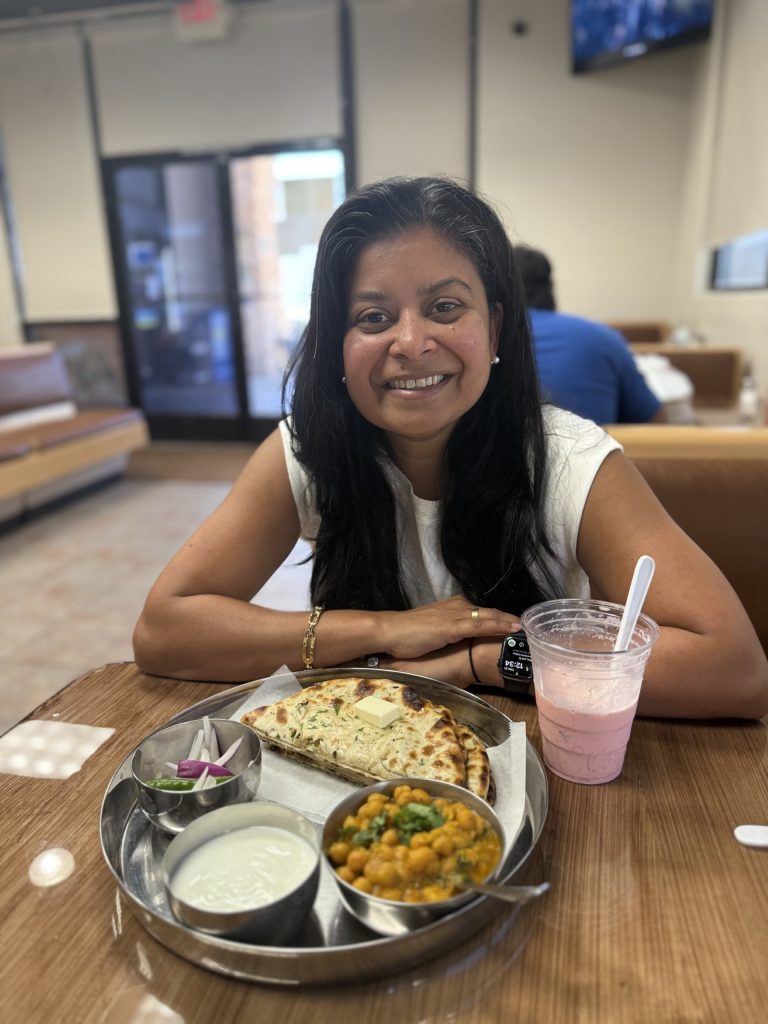
Having witnessed firsthand the use of force against children in her early life, Rehana Parsons knew she wanted to be a beacon of change. She worked as an attorney and took a break during the pandemic—when she came across Fairfax CASA. Since joining the organization, Rehana has served four children from four different families. Her advocacy reflects the late Fred Rodgers’ belief that, in dark and scary times, we look to the helpers in our community—and in an abused child’s life, that helper is a CASA like Rehana.
Read on to learn more about this month’s volunteer spotlight.
Her Supervisor Sena expresses, “Rehana brings a rare blend of legal precision, a people centered – inclusive mindset and a meticulous attention to detail to her role as a CASA. What truly sets her apart is her natural ability to ask the right questions that widen the lens of matters requiring more attention. Her case updates and reports are a delight to read, and she stands firm in her advocacy, never leaving a stone unturned until a solution is found.”
Are you from the area?
Originally, I’m from Kerala on the southern tip of India. During the 1980s, my parents migrated to the U.S. I stayed in India for two years, while my parents found their footing here and eventually joined them in New York City. After completing college and grad school in Boston, I moved to DC in 2006. I’ve been here since, and call Virginia home.
Are you retired? What did you do prior to becoming a CASA?
I’m not working but I’ve never retired. Before becoming a CASA, I worked as an attorney and project manager for federal, state and local governments on a range of issues including homelessness, federal procurement, and human capital planning.
When you’re not volunteering as a CASA, what do you enjoy doing?
I value any and all quality time with my child. My daughter and I just got back from a trip to India and sharing that experience was magical. I love to travel with family, visit with relatives and friends, and cook Indian food.
What brought you to CASA?
I knew in college that I wanted to advocate for women and children. Having been exposed to aggression against children and women from a young age, what I witnessed and experienced made a lasting impression. My professional life moved in other directions but during COVID, I took a break from my career. It was around that time I started looking into organizations dedicated to helping children in crisis and found Fairfax CASA. I was thrilled to learn of its existence.
What is your most memorable experience as a CASA?
For my first assignment, I worked with a young child who was sexually abused by a close family member. They had just been separated from their single parent, who struggled with addiction and cognitive constraints. During one of my home visits, a call came in that my CASA child’s parent had passed away from an overdose. The immediate shock and toll on the family turned a routine visit into a maelstrom; my CASA child was confused and anxious. I decided to take them for a walk around the neighborhood – we played outdoors, sang, and danced to restore normalcy. I was buying time so that his family could absorb what was happening. That small chunk of time spent together with my CASA child was important and meaningful for the moment. I won’t ever forget it. Today, that family has overcome that profound loss and my CASA child is thriving.
What is the best part of being a CASA?
Being with children and being a witness to their resilience and spirit gives me daily perspective and inspiration. And being a CASA has connected me to my wider community and neighbors. The late Fred Rogers famously said that when scary things were happening in the world, his mom encouraged him to look for the helpers – that he would always find people who are caring and who are helping. Being a member of this community of helpers is the best part of being a CASA.
What challenges have you faced in your role as a CASA?
I have two assignments, both involving non-English speaking families and children. So, it’s harder to establish a bond and communication can be a challenge when we don’t share a language in common. With the help of other CASAs, Google translate, and partner provider translators – I’m able to make forward progress. CASA families and children are, by and large, very understanding.
What advice would you give to someone considering becoming a CASA volunteer?
Having a passion for and being committed to helping children and teens overcome adversity is at the core of being a CASA. When you decide to become a CASA, your onboarding and training will be comprehensive. And all throughout, you can count on support and collaboration from your supervisor and CASA leadership. Many aspects of the role will feel natural, and a few parts may feel out of your comfort zone – as you’re moving through an assignment, facts may change abruptly, people may act unpredictably, and answers to questions may seem murky. You may not love writing the CASA report, or if you’re like me, you may not look forward to filling in timesheets. But all these areas are manageable and get easier over time – I’m truly grateful to serve as a CASA and care about our mission.
Become a CASA
Join Rehana and our 150 other CASA volunteers in making a difference in our community. Take the first step and register for a virtual information session to learn how your support can help a child during a time of crisis.